New MCP server — Bring vulnerability intelligence into your AI
Back to feed

CVE-2026-33540

ExploitedNVDCIRCLENISA

EUVD-2026-19289 · Published Apr 6, 2026

Distribution affected by pull-through cache credential exfiltration via www-authenticate bearer realm

hi guys,

commit: 40594bd98e6d6ed993b5c6021c93fdf96d2e5851 (as-of 2026-01-31)
contact: GitHub Security Advisory (https://github.com/distribution/distribution/security/advisories/new)

summary

in pull-through cache mode, distribution discovers token auth endpoints by parsing WWW-Authenticate challenges returned by the configured upstream registry. the realm URL from a bearer challenge is used without validating that it matches the upstream registry host. as a result, an attacker-controlled upstream (or an attacker with MitM position to the upstream) can cause distribution to send the configured upstream credentials via basic auth to an attacker-controlled realm URL.

this is the same vulnerability class as CVE-2020-15157 (containerd), but in distribution’s pull-through cache proxy auth flow.

severity

HIGH

note: the baseline impact is credential disclosure of the configured upstream credentials. if a deployment uses broader credentials for upstream auth (for example cloud iam credentials), the downstream impact can be higher; i am not claiming this as default for all deployments.

impact

credential exfiltration of the upstream authentication material configured for the pull-through cache.

attacker starting positions that make this realistic:

  • supply chain / configuration: an operator configures a proxy cache to use an upstream that becomes attacker-controlled (compromised registry, stale domain, or a malicious mirror)
  • network: MitM on the upstream connection in environments where the upstream is reachable over insecure transport or a compromised network path

affected components

  • registry/proxy/proxyauth.go:66-81 (getAuthURLs): extracts bearer realm from upstream WWW-Authenticate without validating destination
  • internal/client/auth/session.go:485-510 (fetchToken): uses the realm URL directly for token fetch
  • internal/client/auth/session.go:429-434 (fetchTokenWithBasicAuth): sends credentials via basic auth to the realm URL

reproduction

attachment: poc.zip (local harness) with canonical and control runs.

the harness is local and does not contact a real registry: it uses two local HTTP servers (upstream + attacker token service) to demonstrate whether basic auth is sent to an attacker-chosen realm.

unzip -q -o poc.zip -d poc
cd poc
make canonical
make control

expected output (excerpt):

[CALLSITE_HIT]: getAuthURLs::configureAuth
[PROOF_MARKER]: basic_auth_sent=true realm_host=127.0.0.1 account_param=user authorization_prefix=Basic

control output (excerpt):

[CALLSITE_HIT]: getAuthURLs::configureAuth
[NC_MARKER]: realm_validation=PASS basic_auth_sent=false

suggested remediation

validate that the token realm destination is within the intended trust boundary before associating credentials with it or sending any authentication to it. one conservative option is strict same-host binding: only accept a realm whose host matches the configured upstream host.

fix accepted when

  • distribution does not send configured upstream credentials to an attacker-chosen realm URL
  • a regression test covers the canonical and blocked cases

addendum.md
poc.zip
PR_DESCRIPTION.md
RUNNABLE_POC.md

best,
oleh

Technologies

Distribution_Project DistributionDistribution Distribution

Weaknesses

CWE-918

CVSS scores

  • v3.17.5CVSS:3.1/AV:N/AC:L/PR:N/UI:N/S:U/C:H/I:N/A:N

MITRE ATT&CK

Inferred

Where this vulnerability fits in an attack

Initial Access

References

Potentially impacted assets

See if this affects your attack surface

Latest trending attack

High2d ago

OpenSSH (sshd on musl libc) - Password Authentication Bypass

OpenSSH is the standard suite of Secure Shell (SSH) tools providing encrypted remote login and file transfer. Its server daemon, sshd, is the primary remote access mechanism on Unix-like systems, including lightweight Linux distributions such as Alpine Linux that are built on the musl C library without PAM. CVE-2026-123158 Improper handling of password verification in sshd when built without PAM on Linux systems using musl libc. OpenSSH verifies passwords itself by calling crypt() and comparing the output to the stored password field; when the stored field is too short to contain a salt (for example *, which denotes key-only or locked accounts), sshd borrows a salt from another account on the system. Because musl's crypt() returns the string * on error — and it errors on any key longer than 256 bytes — the comparison succeeds for any submitted password between roughly 256 and 1024 characters. An unauthenticated attacker who can reach the SSH port can therefore log in to accounts whose shadow field is * (e.g. root on Alpine base images since about Alpine 3.16, key-only users, or directory-service users without a shadow entry), provided at least one local account has a real $5$ or $6$ hash and PasswordAuthentication yes is in effect. The flaw affects OpenSSH before 10.6p2 on Linux with musl and no PAM; Alpine Linux is the prominent example. The OpenSSH team considers the root cause to be outside sshd but shipped a workaround in Portable OpenSSH 10.6p2 (fix committed 4 November 2026). Alpine published fixed packages on 5 November 2026: 10.6_p2-r0 on edge, 10.3_p1-r2 on 3.24, 10.2_p1-r1 on 3.23, and 10.0_p1-r11 on 3.22, with backports down to 3.16; fixed images are built from point releases 3.21.10, 3.22.8, 3.23.8, and 3.24.4 or later. If patching is not immediately possible, disabling password authentication (PasswordAuthentication no) or enabling PAM closes the exposure. No exploitation in the wild had been reported as of 6 November 2026, and the CVE is not in CISA's KEV catalog, though public proof-of-concept material exists.

Take 15 minutes to discover our platform with our experts

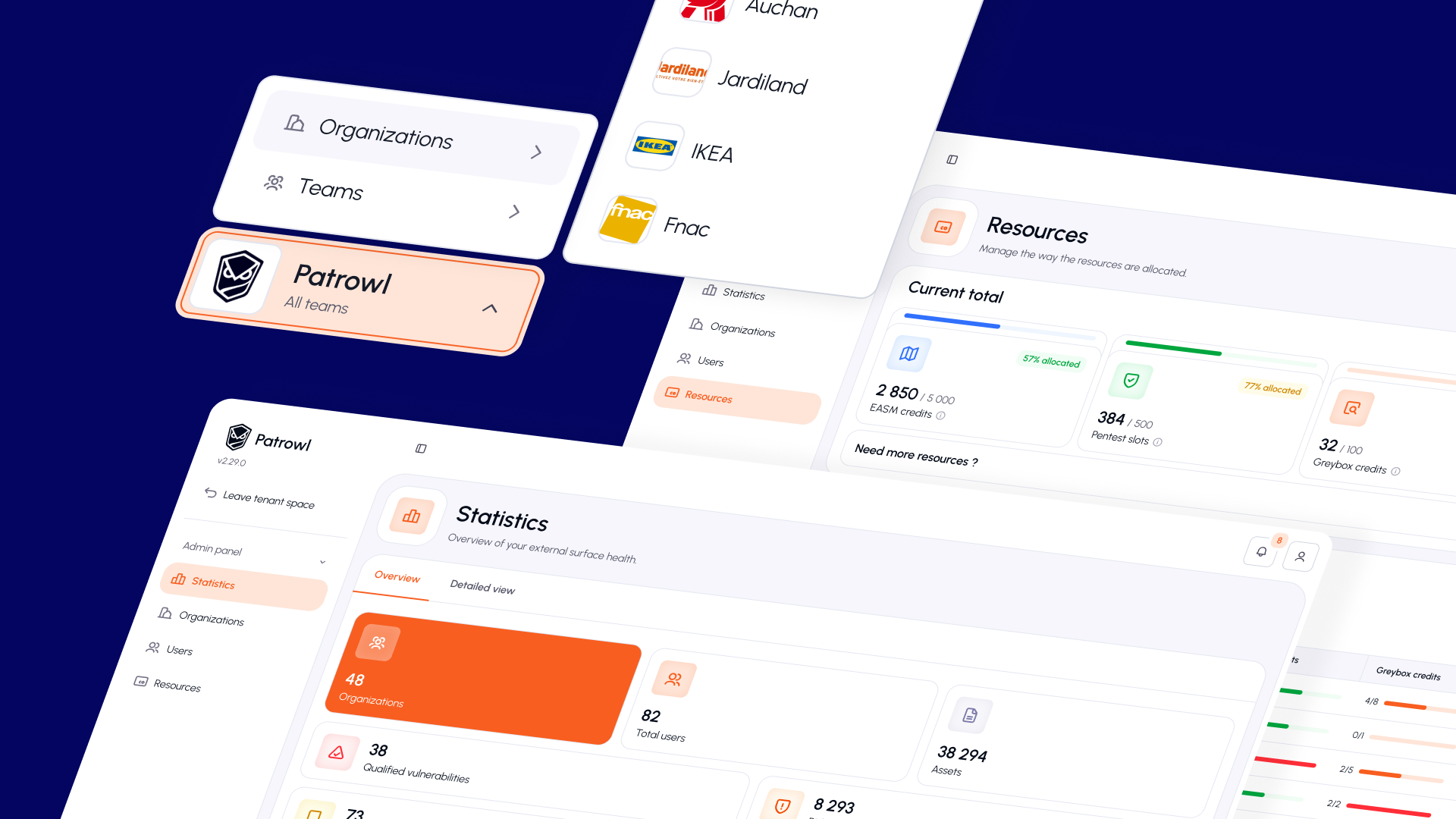
Patrowl Intel platform screenshot