New MCP server — Bring vulnerability intelligence into your AI
Back to feed

CVE-2026-72354

NVDCIRCLENISA

EUVD-2026-59253 · Published Aug 15, 2026

In the Linux kernel, the following vulnerability has been resolved: ntfs: avoid stale runlist element dereference in MFT writeback ntfs_write_mft_block() maps each $MFT record through the $MFT data runlist. For sub-folio clusters it looks up a struct runlist_element under ni->runlist.lock, drops the lock, and later uses rl->length and rl->vcn when choosing folio_sz. That pointer is only borrowed from ni->runlist.rl. Concurrent $MFT allocation extension can merge a replacement runlist under the same lock, and ntfs_rl_realloc() can free the old backing array. If that happens between the lookup and the later folio_sz decision, writeback can dereference freed runlist storage. The buggy scenario involves two paths, with each column showing the order within that path: MFT writeback path: $MFT allocation extension: 1. Look up rl under 1. Extend the $MFT data allocation. ni->runlist.lock. 2. Publish a replacement runlist. 2. Drop ni->runlist.lock. 3. Free the old runlist array. 3. Read rl->length and rl->vcn to choose folio_sz. Compute the remaining run length while ni->runlist.lock is still held, and use that scalar after unlock. This preserves the existing folio sizing decision without carrying a borrowed runlist_element across the lock boundary. Validation reproduced this kernel report: BUG: KASAN: slab-use-after-free in ntfs_mft_writepages+0x1c8d/0x1fb0 Call Trace: <TASK> dump_stack_lvl+0x66/0xa0 print_report+0xce/0x630 ? ntfs_mft_writepages+0x1c8d/0x1fb0 ? srso_alias_return_thunk+0x5/0xfbef5 ? __virt_addr_valid+0x20d/0x410 ? ntfs_mft_writepages+0x1c8d/0x1fb0 kasan_report+0xe0/0x110 ? ntfs_mft_writepages+0x1c8d/0x1fb0 ntfs_mft_writepages+0x1c8d/0x1fb0 ? __pfx_ntfs_mft_writepages+0x10/0x10 ? __pfx___mutex_unlock_slowpath+0x10/0x10 ? srso_alias_return_thunk+0x5/0xfbef5 ? iput+0x92/0xa80 do_writepages+0x219/0x530 ? __pfx_do_writepages+0x10/0x10 __writeback_single_inode+0x117/0xf50 ? do_raw_spin_lock+0x130/0x270 ? __pfx_do_raw_spin_lock+0x10/0x10 ? __pfx___writeback_single_inode+0x10/0x10 ? srso_alias_return_thunk+0x5/0xfbef5 writeback_sb_inodes+0x65b/0x1810 ? srso_alias_return_thunk+0x5/0xfbef5 ? lock_acquire+0x2b8/0x2f0 ? __pfx_writeback_sb_inodes+0x10/0x10 ? lock_release+0x1e0/0x280 ? _raw_spin_unlock+0x23/0x40 ? move_expired_inodes+0x2b8/0x850 __writeback_inodes_wb+0xf4/0x270 ? __pfx___writeback_inodes_wb+0x10/0x10 ? srso_alias_return_thunk+0x5/0xfbef5 ? queue_io+0x2e4/0x410 wb_writeback+0x666/0x880 ? srso_alias_return_thunk+0x5/0xfbef5 ? __pfx_wb_writeback+0x10/0x10 ? srso_alias_return_thunk+0x5/0xfbef5 ? srso_alias_return_thunk+0x5/0xfbef5 ? get_nr_dirty_inodes+0x1c/0x170 wb_workfn+0x75e/0xbb0 ? srso_alias_return_thunk+0x5/0xfbef5 ? _raw_spin_unlock_irqrestore+0x27/0x60 ? __pfx_wb_workfn+0x10/0x10 ? __pfx_debug_object_deactivate+0x10/0x10 ? lock_acquire+0x2b8/0x2f0 ? srso_alias_return_thunk+0x5/0xfbef5 ? lock_release+0x1e0/0x280 process_one_work+0x8d0/0x1870 ? __pfx_process_one_work+0x10/0x10 ? srso_alias_return_thunk+0x5/0xfbef5 worker_thread+0x575/0xf80 ? __pfx_worker_thread+0x10/0x10 kthread+0x2e7/0x3c0 ? __pfx_kthread+0x10/0x10 ret_from_fork+0x576/0x810 ? __pfx_ret_from_fork+0x10/0x10 ? srso_alias_return_thunk+0x5/0xfbef5 ? __switch_to+0x57e/0xe10 ? __switch_to_asm+0x33/0x70 ? __pfx_kthread+0x10/0x10 ret_from_fork_asm+0x1a/0x30 </TASK> Allocated by task 970: kasan_save_stack+0x33/0x60 kasan_save_track+0x14/0x30 __kasan_kmalloc+0xaa/0xb0 __kvmalloc_node_noprof+0x353/0x920 ntfs_rl_realloc+0x3c/0x80 ntfs_runlists_merge+0x1212/0x3010 ntfs_mft_data_extend_allocation_nolock+0x3e0/0x1f40 ntfs_mft_record_alloc+0x1ab4/0x4f10 __ntfs_create+0x680/0x2e50 ntfs_create+0x1e6/0x3a0 path_openat+0x2b55/0x3c10 do_file_open+0x1f4/0x460 do_sys_openat2+0xde/0x170 __x64_sys_openat+0x122/0x1e0 do_syscall_64+0x115/0x6a0 entry_SYSCALL_64_after_hwframe+0x77/0x7f Freed by task 1294: kasan_save_ ---truncated---

CVSS scores

  • v3.18.8CVSS:3.1/AV:N/AC:L/PR:L/UI:N/S:U/C:H/I:H/A:H

MITRE ATT&CK

Inferred

Where this vulnerability fits in an attack

Initial Access

References

Potentially impacted assets

See if this affects your attack surface

Latest trending attack

Criticalyesterday

Google Brotli decoder - Remote Code Execution via compressed requests (Exploitation Check)

This control is the second step of the Patrowl response to CVE-2026-111497 (Node2Shell). It complements the first control of 22 October 2026, which focused on the Node.js runtime, and does not replace it. Why a second control CVE-2026-111497 is an out-of-bounds write in the Google Brotli decoder, the library that decompresses Brotli ("br") data. It was first published as a Node.js vulnerability, because Node.js bundles this decoder. Later publications showed that the flaw is in the library itself. Every product that embeds an affected version of the decoder is concerned, whatever its language or vendor. A public proof of concept demonstrates code execution. Any server that decompresses request bodies sent with "Content-Encoding: br" exposes the decoder to unauthenticated attackers. Known cases include Express 5 and NestJS 11 on Node.js, Koa and Fastify setups, Bun, Envoy and Istio with request decompression enabled, and any application or reverse proxy that decodes Brotli request bodies with an affected library. The flaw also works in the other direction. A malicious server can compromise an unpatched client that decodes a Brotli response, for example Node.js fetch(), Python clients (requests, httpx, aiohttp, Scrapy) with the Brotli or brotlicffi package, or libcurl builds with Brotli support. What this control checks Patrowl sends small, valid Brotli-compressed requests to each asset and observes whether the server decodes them. The check does not depend on the technology: it detects the behaviour, whatever the stack behind it. These requests are what any legitimate client could send. They never reach the vulnerable code path and cannot affect the availability of the service. How to read the result Potentially impacted means the asset decodes Brotli request bodies: the attack surface is exposed. It does not confirm that the asset is vulnerable. The version of the Brotli decoder in use is not visible from the outside. This check covers applications that parse request bodies on their root path. A Not impacted result does not rule out exposure on other routes, nor on the client side. Checking the versions on the servers remains the only exhaustive verification. Affected and fixed versions Google Brotli 1.0.3 to 1.2.0 are affected, fixed in 1.0.10, 1.1.1 and 1.2.1. Fixed releases of the main products embedding it: Node.js 22.23.4, 24.22.1 and 26.12.1 (end-of-life lines 20.x and older and 25.x receive no fix), Bun 1.4.4, Envoy 1.37.8, 1.38.6, 1.39.3 and 1.40.0, Istio 1.29.9, 1.30.6 and 1.31.2, Python Brotli 1.2.1 and brotlicffi 1.2.1.0. Products that link against the system library depend on the Brotli package of the Linux distribution. Recommendations Update every component that embeds the Brotli decoder (only real fix). Start with the assets flagged by this control. Restart the processes after the update. Rebuild containers, single-executable applications and appliances that bundle an affected runtime or library. Reduce the exposure until the update is deployed. Reject requests with "Content-Encoding: br" at the reverse proxy, load balancer or WAF, case-insensitively and including lists such as "gzip, br". On Envoy and Istio, disable request decompression for Brotli. Review outbound calls. List the features that fetch content from servers you do not control, and patch the services that host them first.
Take 15 minutes to discover our platform with our experts

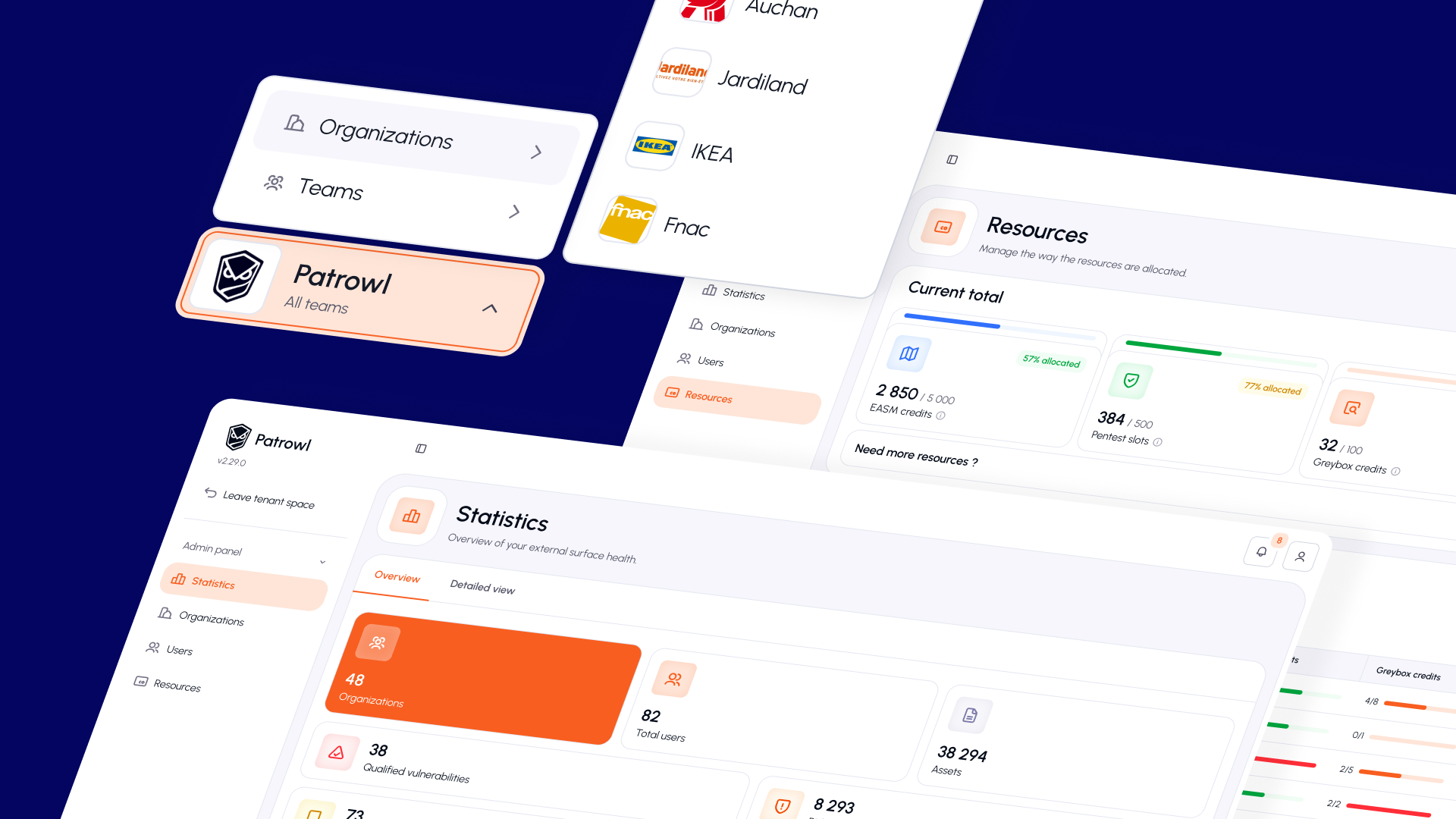
Patrowl Intel platform screenshot